Myopia Control in Gonzales
Myopia, also known as nearsightedness, is a common condition in which people can’t see or have difficulty seeing objects in the distance, such as road signs when driving or a screen in a classroom. They can, however, clearly see objects up close, such as books, computer screens, and phones. Symptoms of myopia can include eye strain, headaches, squinting, and feeling fatigued after driving.
What Causes Myopia?
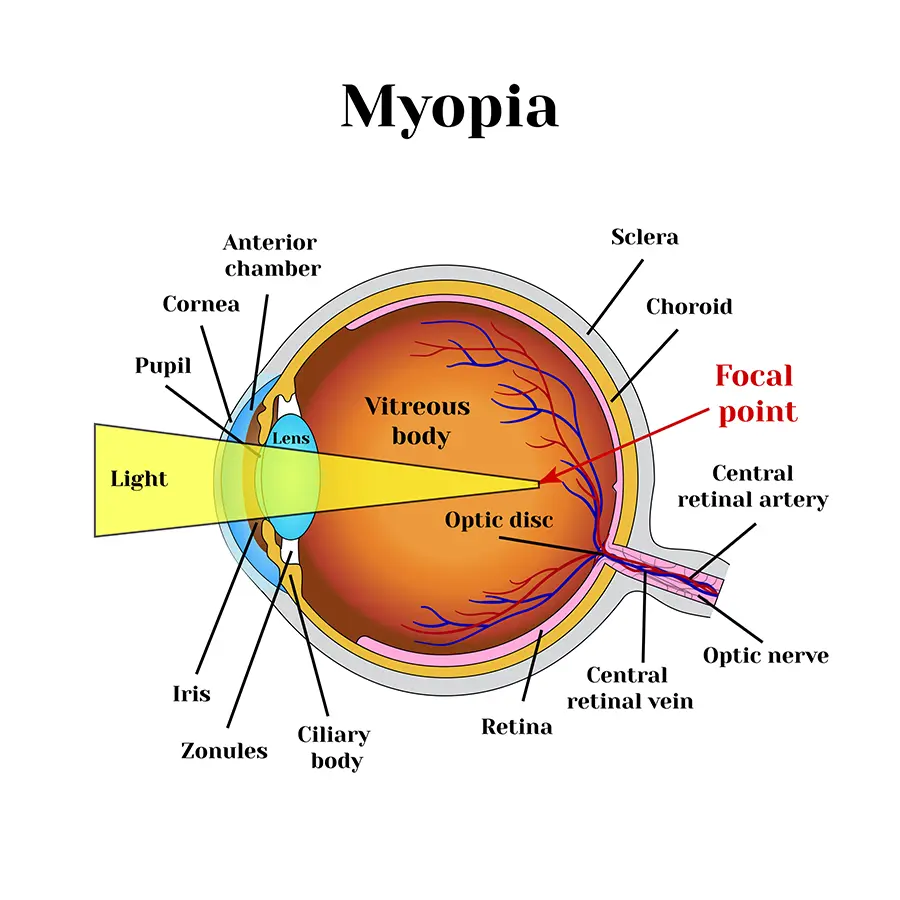
Myopia occurs when the eyeball is too long or when the cornea or lens is too curved for the shape of the eyeball. Myopia often begins in childhood and can be genetic. The greatest changes in myopia occur from age 6-16. Young children undergo incredible growth development, and their vision also undergoes crucial developmental steps. With every growth spurt your child’s eye is elongating and the cornea is steepening. Although glasses can be used to refocus, they do not slow down the elongation of the eye or halt the progression of myopia.
Has your child been diagnosed with myopia? See the world through their eyes using this myopia simulator: myopia-simulator
Those with progressive myopia are at a higher risk for developing eye health problems later in life. Myopia is the sixth leading cause of blindness and more than 50% of retinal detachments are associated with myopia. Problems can also include cataracts, macular degeneration, and glaucoma. In light of this, it is important to see an optometrist for routine eye exams that screen for these issues.
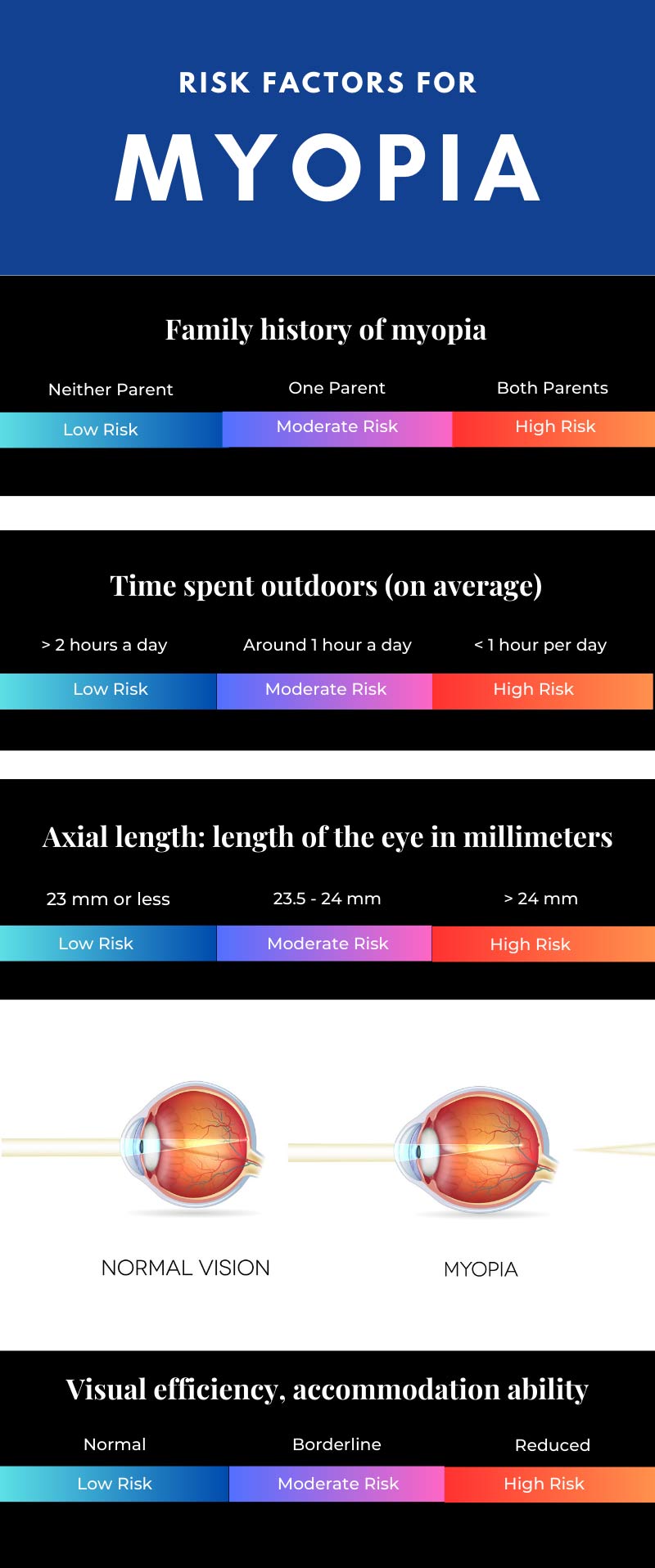
Risk Factors for Myopia
Family history of myopia
Neither Parent
One Parent
Both Parents
Low risk
Moderate risk
High risk
Time spent outdoors (on average)
More than 2
hours a day
Around 1
hour a day
Less than 1
hour a day
Low risk
Moderate risk
High risk
Axial length: length of the eye in millimeters
23 mm or less
23.5 – 24 mm
> 24 mm
Low risk
Moderate risk
High risk
Visual efficiency, accommodation ability
Normal
Borderline
Reduced
Low risk
Moderate risk
High risk
What is Myopia Control?
The first step to finding a myopia solution for your child is to get to the bottom of their visual needs through a comprehensive eye exam using state-of-the-art tools like the Myopia Master. Various forms of myopia control help slow or stop the progression of myopia, preventing nearsightedness from worsening, including orthokeratology, dual-focus contact lenses, and atropine eye drops.
Myopia Control in Gonzales
Myopia is starting earlier and progressing faster. Interested in learning more about myopia management and treatment options that are offered? Schedule an eye exam for your child at our Gonzales eye care center and let us know if you want to learn more about myopia control. Our optometrists will examine your child’s eyes and suggest the next best steps for their needs.